


Problem areas – examples of solutions – joint strategies in the context of the shortage of skilled workers
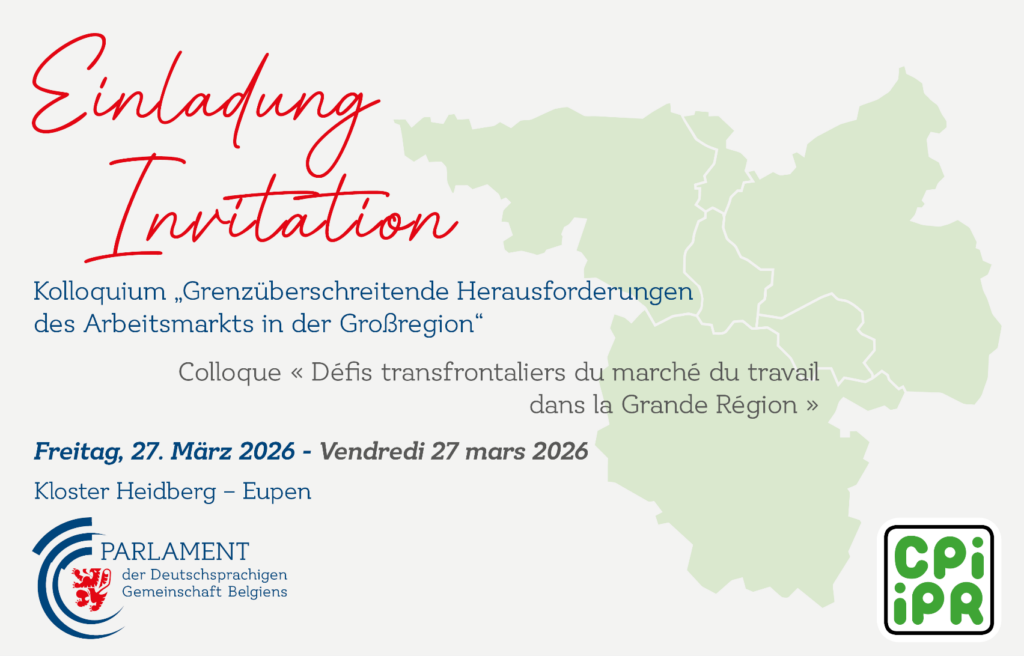
What are the current challenges for stakeholders in the cross-border labour market of the Greater Region? Are we on the right track to removing barriers for businesses? What is the situation regarding the cross-border recognition of vocational training and further education? Is it possible to develop joint strategies in times of skilled labour shortages?
The colloquium brings together politicians and institutions, companies and social partners, associations and projects from the Greater Region to explore these and other questions relating to the cross-border labour market. Stakeholders from the field will report on problem areas and discuss concrete solutions – with you! The colloquium will also look at neighbouring cross-border associations such as the Euregio Meuse-Rhine, the Benelux Union and the Upper Rhine Conference in order to link their interregional experiences with the Greater Region.
During the event, Martin Unfried (Director of ITEM) will deliver a keynote speech: “What is needed for a cross-border integrated labour market?”
Following the conference, there will be an opportunity for informal exchange and networking during a walking lunch. Institutions, associations and projects will have the opportunity to introduce themselves at information tables during the supporting programme.
The colloquium will be held in German and French, with interpretation provided.
An event organised by the Parliament of the German-speaking Community as part of its co-presidency of the Interregional Parliamentary Council of the Greater Region. The Greater Region comprises the Walloon Region, the French and German-speaking communities, Rhineland-Palatinate and Saarland, Luxembourg and the Grand-Est region. The Interregional Parliamentary Council (IPR) is an association of the parliamentary representatives of these regions with the aim of promoting cross-border cooperation. The Belgian partners will hold the presidency in 2025-2026.
Additional information and the full programme can be found here.