
If you have bad luck, you can still spend 15-30 minutes on the Autobahn in a traffic jam close to the border on your way from Maastricht to Aachen. There, the Bundespolizei is slowing down the traffic and selecting certain cars or truck drivers for checking their passports. This type of traffic jam has already led to serious accidents at the border close to Nijmegen. Hence, the mayor of Nijmegen, Hubert Bruls is not amused. He told me that Germany has to stop this type of controls since it is jeopardizing the Euregional “spirit” that has been built up for the last decades. We both cherish the idea that citizens in the region on the German and Dutch side belong together without borders and daily controls.
Kafkaesque
But border controls are also heavily back in other cross-border regions. My own absurd experience: I travelled a couple of weeks ago on a Flixbus from the Croatian city of Rovinj to the Slovenian capital Ljubljana. On my way, there was also a bus stop in Trieste in Italy. Meaning, that on the bus, we were controlled within a distance of 30 kilometres, first by the Croatian, then the Slovenian and finally by the Italian border control. This took certainly in total almost 45 minutes. And even worse, the attitude of the different officers was not really Schengen minded, meaning not very friendly towards us, travellers in the Schengen zone with “open” borders. It felt a bit like crossing the border a long time ago to Yugoslavia when we were still divided. In fact, it was an efficient way to destroy any Euregional spirit and mindset. Let alone, the (unnecessary) significant operational and societal costs of three separate border controls that could be overcome by better cross-border cooperation and coordination between the national officers.
Unlawful
As a reminder, the basic Schengen rule is that there are no border controls at the internal borders of EU Member States and certain other countries. This has been a success story for the last 40 years with tremendous cost savings with respect to personnel and economic transactions. To safeguard the positive effects, the Schengen Border Code only allows for exceptions. In “exceptional” circumstances, where public order or internal security in a Member State is seriously threatened, border controls may be temporarily reintroduced or extended. Temporarily! The Member State in question must provide sound justification for such an exception and inform the European Commission and the other EU Member States accordingly. And also has to assess the particular effects in cross-border regions. Now, the question is whether the German government will again notify border controls for the period after September 2026. Minister Dobrindt announced already that the controls will be prolonged. Mr Dobrindt belongs to the self-proclaimed “law and order” party CSU from Bavaria. His argument in favour of border controls is pure political: we need them for reducing the number of migrants. However, the numbers have already gone down in comparison to previous years. There is no mentioning of a new current threat to the national security. So, this political statement from a ‘law and order’ politician is very likely in breach of EU law. It is simply not respecting the requirements of the Schengen code. Last year, a German Administrative Court in Koblenz has already upheld a claim by law professor Dominik Brodowski from the University of Saarbrücken. The court ruled that the border controls at that time at the German-Luxembourgish border contravened the Schengen rules and were therefore unlawful. According to the court, a threat to national security could arise if there were a sudden surge in unauthorised migration, which could place the state authorities’ capacities under considerable strain. However, it stated that the defendant, the Federal Republic of Germany, had not sufficiently demonstrated that there would be an increase in migration flows during that period. Of course, the Federal government lodged an appeal against the judgment.
A funny sidenote: Professor Brodowski and I met at the conference in Luxembourg where we celebrated 40 years of Schengen. The mentioned border control happened on his way back close to Schengen.
EC Opinions
Having this judgement in mind, the already mentioned Hubert Bruls, mayor of Nijmegen, asked what the European Commission is doing? Or better, why the Commission has so far not reacted? Today in June 2026, the Commission has published its Opinions on the reintroduction of border controls by nine Member States. It is a bit belayed fulfilment of the legal requirement under Article 27a(3) SBC for the Commission to issue an Opinion when border controls will exceed 12 months. All nine Member States were asked to gradually lift the internal border controls, including Germany and the Netherlands. While, to our opinion, the Commission opinions on the proportionality arguments were modest in general, the assessment of the German practice of border controls is critical. The Commission stated that the German authorities should work towards the gradual lifting of internal border control, based on a tailor-made approach per part of the internal border and per threat, making full use of the available alternative measures under the revised Schengen Borders Code. This would mean instead of static and systematic checks as today, non-static, non-systematic risk-based spot checks, including police checks in the border area and reinforced police cooperation with neighbouring Member States. This is what the Dutch side is already doing and will increasingly do with some legal reforms. Indeed, also the Dutch government was asked to lift their formal border controls and use national alternative information and risk-based alternatives instead.
Translation problem
Last year, in our study on the effects of the border controls we found that there are asymmetric effects. Negative effects like waiting times, traffic jams and diversion traffic through villages occurred on the Dutch side of the border. Hence, the German government can easily assess the effects on the own border territory and claim that they are proportional. This is namely true thanks to the smart operations on the Dutch side, which are replacing structural checks at the border.
Another fun fact: according to the Schengen Borders Code, the Member States have to assess the impacts on their “cross-border” regions. This is the term used in the English text: cross-border region. So, our understanding is that Germany has also to assess whether the measures are proportional with respect to the Dutch side of the border. Unfortunately, there is a translation problem. The German translation of the Schengen Borders Code mentions “Grenzregion”, which is a different thing than “grenzüberschreitende Region”. The same is true for the Dutch translation, as well as the Danish, Swedish and the Hungarian ones. For the EU official language French (région transfrontalière) and other Romance languages, the cross-border/transfrontier element is consistently presented.
Homework
Last week, I discussed this important inconsistency in Brussels at a panel on Schengen in the European Committee of the Regions. The Commission representative admitted that they were also not aware of this. The Dutch word used in the regulation is ‘grensregio’. Also that is not really the translation of “cross-border” region. Nevertheless, we at ITEM stick to the interpretation that the English version is giving the right direction: Member States have to check whether the temporary border controls have effects on the cross-border territory and whether they are proportional. We, at ITEM, are convinced that they are not.
This leaves important homework for both the Commission as well as Member States to do. First, Member States have to lift their border controls and come with more effective methods to combat irregular and illegal migration, such as through cross-border cooperation. We highlighted it already in our study: bi- or multilateral (police) cooperations are more likely to be hindered than utilised in times of border controls. And in practice, the bus trip in the Italian-Slovenian-Croation border triangle is a clear example of this. Secondly, the Commission may fix its translation mistake of ‘cross-border regions’ for the Nordic and German influenced languages, reflecting the true spirit of the proportionality assessment. And finally, it is up to the Member States to come with true cross-border regions in their national notifications and assess the (potential) impacts across its own administrative land borders.
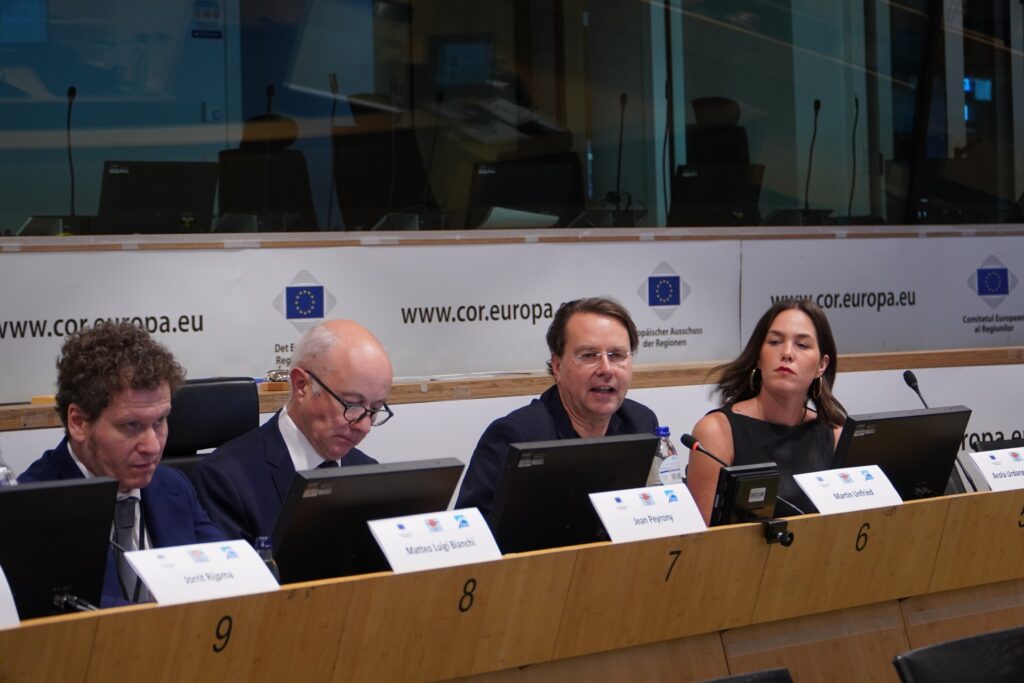
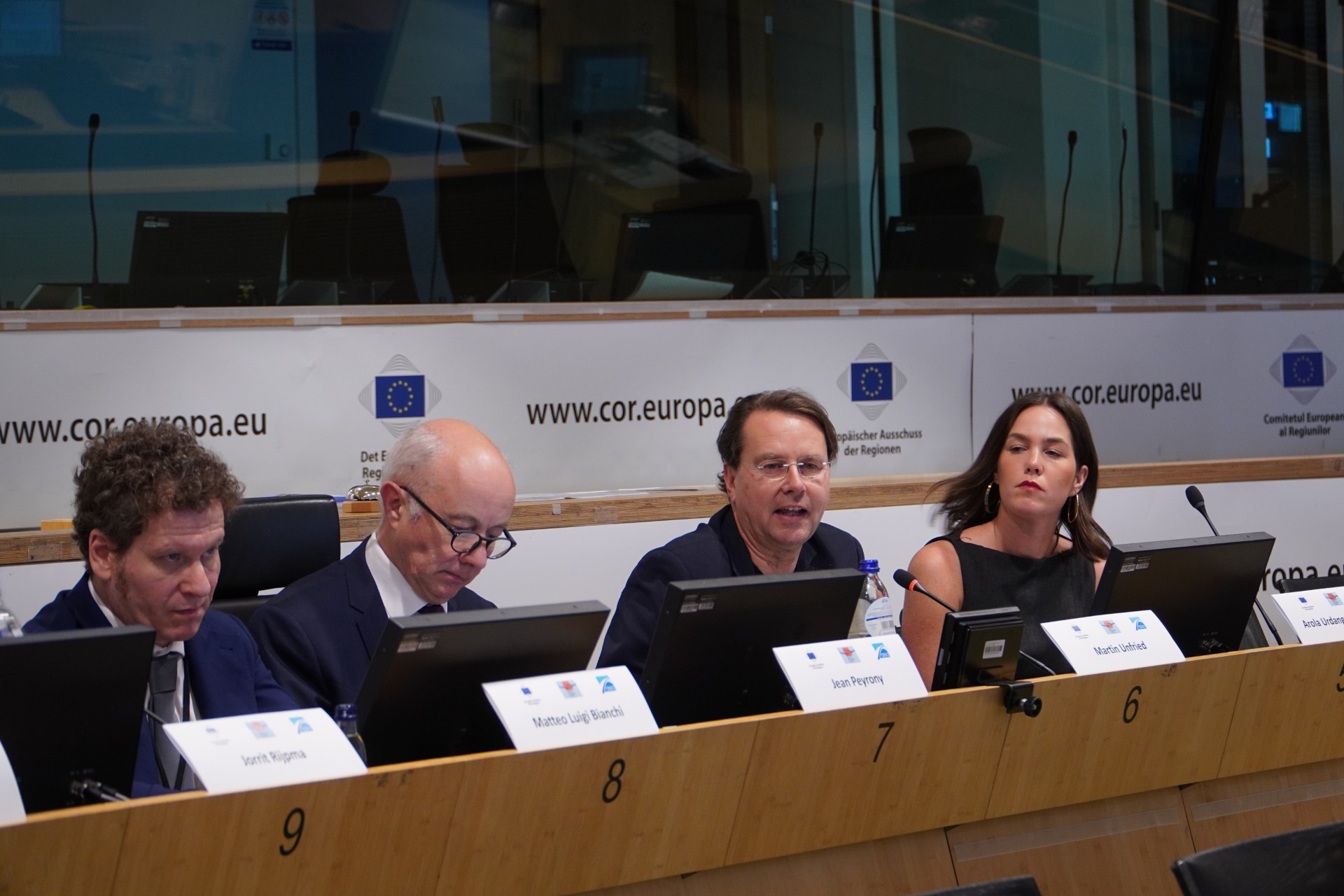
On 11 June 2026, ITEM Director Martin Unfried participated in the panel debate
“Future of Cross-Border Regions in the Schengen Area” at the European Cross-Border
Platform Annual Meeting in Brussels.