
The use of unmanned aircraft systems (UAS) is expanding rapidly across Europe as drone technology matures, and applications move beyond recreational use towards routine commercial and public service operations. Increasing demand for UAS services in sectors such as healthcare, emergency response, infrastructure inspection, environmental monitoring and logistics has been accompanied by the gradual development of a harmonised European regulatory framework intended to enable safe and scalable operations. Ensuring that regulatory and administrative frameworks support routine cross-border operations is becoming increasingly important, particularly in border regions where cooperation across national boundaries is part of everyday practice.
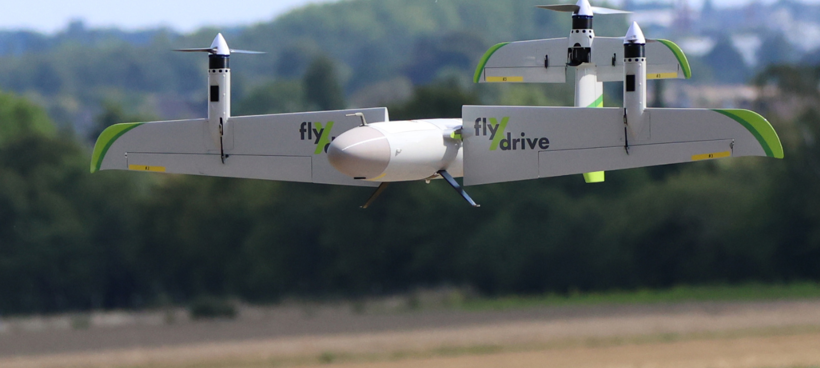
For instance, the COVID-19 pandemic and regional flooding exposed vulnerabilities in healthcare resiliency and logistics and demonstrated the importance of cross-border cooperation. In the Euregio Meuse-Rhine, one of Europe’s most interconnected border regions, healthcare providers across national borders are often geographically closer than providers within the same national healthcare system, yet cooperation, such as cross-border transport of medical goods, remains hindered by regulatory and administrative obstacles. Unmanned aircraft systems (drones) offer significant potential to strengthen cross-border healthcare logistics by enabling the rapid transport of time-critical medical goods, provided that an enabling regulatory framework supports their safe and scalable cross-border deployment. Within this context, the Interreg Meuse-Rhine funded EDEN-Medical project brings together hospitals, universities, public authorities and industry partners from Belgium, Germany and the Netherlands to develop and evaluate a cross-border UAS network for the transport of medical goods while addressing the legal, organisational and operational conditions required for its implementation.
Recognising that regulatory and administrative challenges remain among the principal barriers to routine cross-border UAS operations – and that many of these challenges arise from the interaction between European and national legislation, as well as differences in their implementation and administrative procedures – the project hosted a dedicated workshop focusing on legal and administrative aspects. The workshop acknowledged that these obstacles are not unique to the EDEN-Medical project or the Meuse-Rhine region but are common to many (cross-border) operators, particularly within the Benelux-Germany region. Participants across these regions, including representatives from comparable initiatives, industry, public authorities, healthcare organisations, legal experts and other relevant stakeholders, were explicitly invited to facilitate cross-sector and cross-border dialogue. The workshop aimed to promote knowledge exchange, enable participants to learn from one another’s practical experiences, jointly identify existing barriers and develop recommendations reflecting a broad stakeholder consensus. Building upon these discussions and the wider project activities, this position paper translates the practical experiences and shared perspectives of persisting legal and administrative obstacles of stakeholders across the Benelux-Germany region into policy recommendations aimed at facilitating (cross-border) UAS operations through greater regulatory harmonisation and administrative simplification at the European level.